
Best Time to Visit the Pyramids of Giza & Saqqara in 2025
“Knowing the best time to visit the Pyramids of Giza & Saqqara can make or break your trip.”
Okay, let me tell you something – there’s literally nothing else like the Pyramids of Giza anywhere on this planet. They’re the only survivor from the seven ancient wonders (talk about staying power!), and they’ve been sitting there for over 4,500 years just waiting for you to show up. When you finally stand in front of these massive things, it’s honestly mind-blowing.
But here’s the thing – figuring out the best time to visit the pyramids can totally make or break your trip. Trust me on this one.
Now, I’m gonna be real with you about what you’re walking into. The pyramid scene comes with what locals call the “pyramids hustle” – and boy, is it real. We’re talking persistent vendors who won’t take no for an answer, guides of questionable quality, people trying to sell you “authentic” trinkets (spoiler alert: they’re not), and various folks who basically see tourists as walking wallets. But don’t let this scare you off! It’s still absolutely worth it.
This guide’s gonna help you navigate all that craziness and make sure you have an amazing time. Whether you’re trying to do budget travel to pyramids style or looking for the cheap time to visit pyramids, I’ve got your back with all the real talk you need.
The Pyramids of Giza & Surrounding Wonders: What You Need to Know

So What Exactly Are These Pyramids?
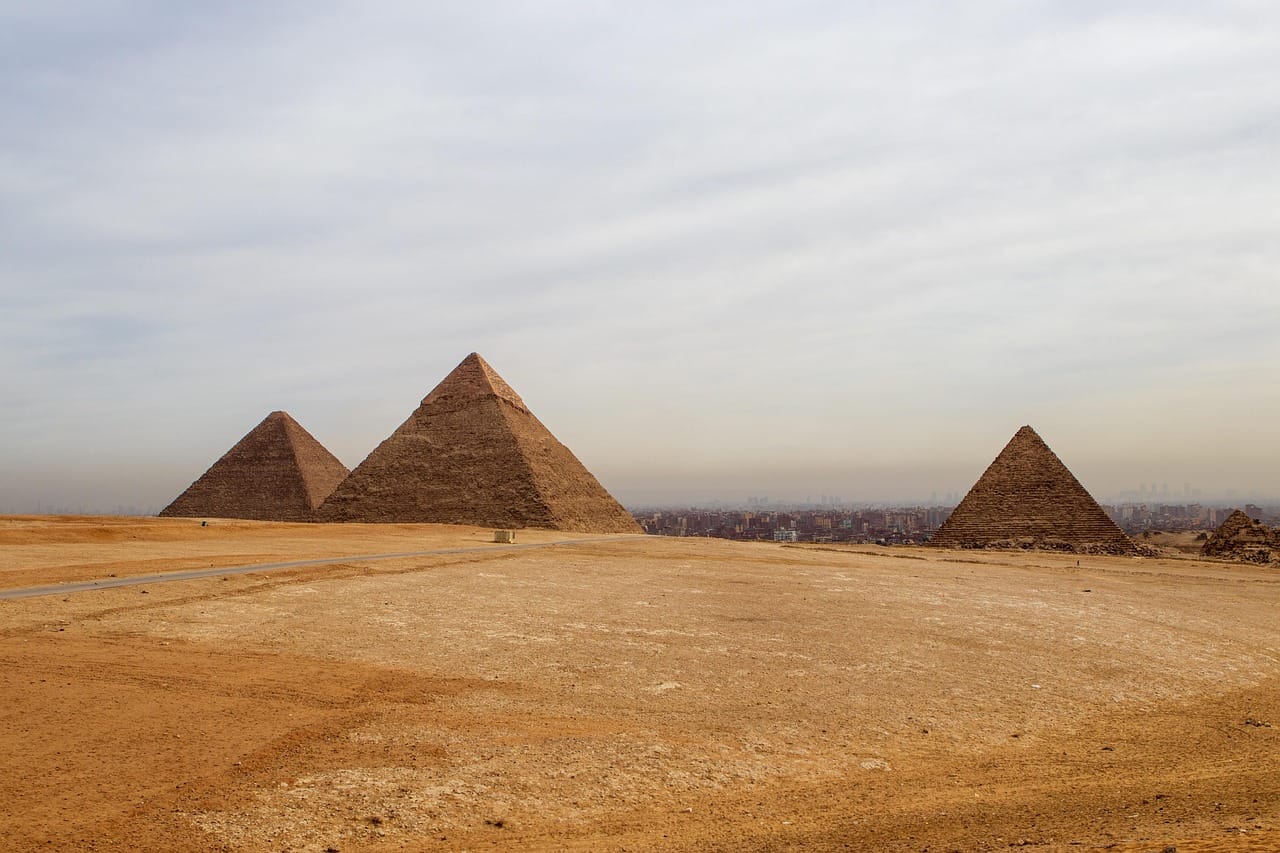
The Pyramids of Giza are basically the rock stars of the pyramid world, sitting just south of Cairo. You’ve got six pyramids total hanging out there: the big kahuna Great Pyramid of Khufu (also called Cheops), the Pyramid of Khafre, the Pyramid of Menkaure, plus three smaller Queens’ Pyramids that are like their sidekicks.
Here’s the kicker though – these things were built as super fancy tombs for pharaohs, complete with all their treasures and stuff they’d need in the afterlife. The irony? They totally failed at being tombs. Grave robbers cleaned them out ages ago, and we’ve never found a single mummy. Epic fail, ancient Egyptians! Though there’s this theory that Khafre might still be chilling in some secret chamber somewhere.
The Great Sphinx: Your Friendly Neighborhood Lion-Human Hybrid
Right there guarding everything is the Great Sphinx – picture a lion’s body with a human head (ancient Egyptians were wild with their imagination). And no, Napoleon didn’t blow its nose off with cannons, despite what that urban legend says. Historical records show it was already noseless way before Napoleon even showed up.
Here’s a bummer though – you can’t go inside the Sphinx. It’s totally off-limits, so you’ll be admiring it from the viewing areas like everyone else. Those amazing close-up shots you see on Instagram? Yeah, they’re using some serious zoom lenses. Pro tip: save the Sphinx for last because of how the roads work in there.
Level Up Your Pyramid Game: Saqqara & Dahshur
Why You Should Totally Check Out These Lesser-Known Spots
Okay, so Giza’s cool and all, but if you really want to feel like you’re in the middle of nowhere (in the best way possible), you gotta hit up Saqqara and Dahshur. While Giza’s basically become part of Cairo’s suburbs now, these places still have that “lost in the desert” vibe that’s pretty magical.
Plus, they show you how the whole pyramid thing evolved – it’s like seeing the iPhone 1 before you get to the iPhone 14, you know? And bonus: way fewer crowds and pushy vendors, especially if you show up early. Perfect for budget travel to pyramids when you want the experience without the circus.
Saqqara: Where It All Started
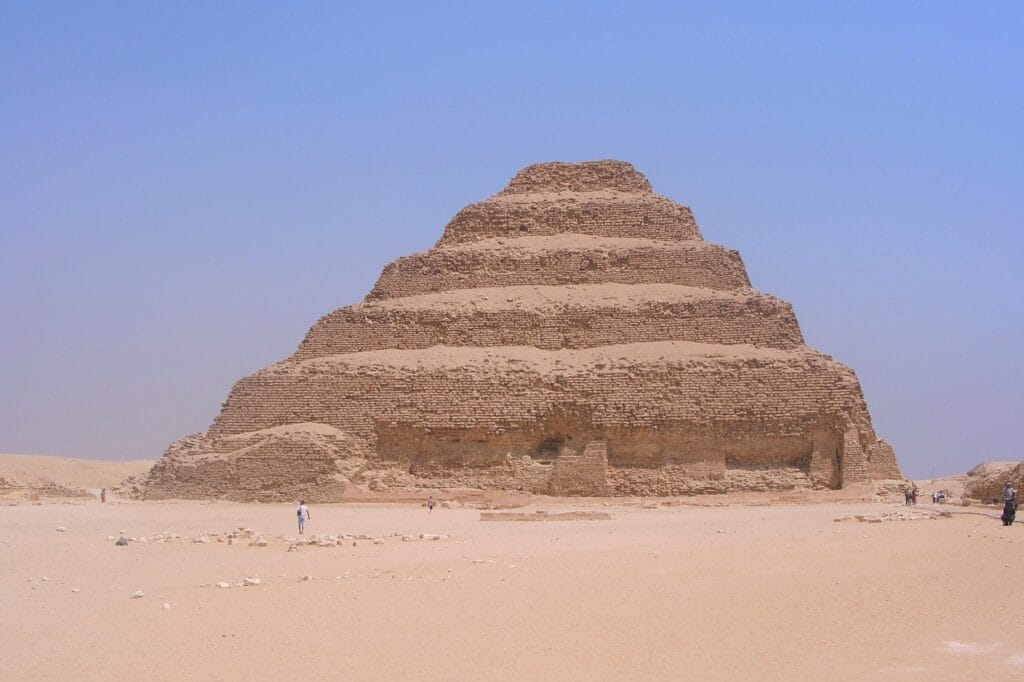
This place is home to the Step Pyramid of Djoser – basically the granddaddy of all pyramids and the world’s first stone building. Pretty cool, right? There’s also the Imhotep Museum at the entrance with some neat artifacts.
But here’s where Saqqara gets really cool – unlike those empty pyramid interiors at Giza, the tombs here are absolutely covered in amazing decorations. We’re talking walls full of carved food (because apparently ancient Egyptians took their afterlife snacks seriously) and you can still see traces of the original blue paint. Check out Ptahhotep’s tomb for some incredible everyday life scenes, and Teti’s pyramid has this gorgeous star-covered ceiling that’ll make you want to lie down and stare up at it forever.
Just heads up – the Step Pyramid’s got scaffolding all over it right now because they’re fixing it up. And yeah, there are still vendors here, but way fewer than at Giza.
Dahshur: The Practice Round
Dahshur’s got these two pyramids built by King Snefru, and they’re basically the “learning curve” pyramids. The Bent Pyramid is hilarious because halfway through building it, the architects were like “Uh oh, this angle isn’t gonna work” and had to change it mid-construction. It still has most of its original limestone covering, which is pretty rare.
The Red Pyramid is where they got it right after learning from their mistakes – it’s basically the same size as the Great Pyramid but with way fewer people around. Sometimes you’ll have the whole place almost to yourself, which is pretty surreal. You can go inside the Red Pyramid too, though fair warning – it’s just as steep, dark, and empty as the ones at Giza.
Planning Your Visit: The Practical Stuff
Getting There Without Losing Your Mind
The pyramids are about 15 kilometers from central Cairo, but thanks to Cairo’s absolutely insane traffic, it could take you anywhere from 30 minutes to an hour and a half. I’m not even exaggerating.
Uber is honestly your best bet. The prices are set by the app so you won’t get ripped off, and you don’t have to try explaining where you want to go in broken Arabic. It just works.
Regular taxis are cheaper but you’ll have to haggle, and some drivers will try to quote you in US dollars instead of Egyptian pounds to confuse you. Stick with the white taxis that have AC – trust me on this one.
Private drivers are nice if you want someone to wait for you, but watch out for drivers who try to rush you or keep stopping at their cousin’s souvenir shop.
Public transport is super cheap but honestly? Unless you’re really adventurous or on a shoestring budget, I’d skip it. Cairo’s public transport system is like a puzzle designed by someone who doesn’t want you to solve it.
Tour groups cost the most but handle everything for you, which might be worth it if you hate dealing with logistics.
Tickets and Money Stuff (2024 Prices)
The ticket office is on Al Haram Road, and here’s the deal – bring cash because they basically don’t take cards. Also, buy ALL your tickets before you go in because going back out to get more tickets is a massive pain.
What things cost right now:
- Just getting onto the plateau: 540 EGP (that’s like $17-18)
- Going inside the Great Pyramid: 900 EGP (expensive but worth it)
- Inside the other pyramids: 220 EGP each
- Some special tomb: 120 EGP
- Driving your car inside: 10 EGP
- Kids under 6: Free (lucky them!)
- Students with ID: Discounts available
When to Actually Go (This Is Important!)
Time of year: October through April is when you want to be there. It’s not trying to kill you with heat, and the weather’s actually pleasant. November and February are absolutely perfect – we’re talking 68-77°F during the day. This is also the cheap time to visit pyramids because hotels often have better rates during the shoulder seasons.
When NOT to go: June through August unless you enjoy feeling like you’re inside an oven. We’re talking 104°F+ and it’s just miserable.
Time of day: Get there right when they open at 8 AM. Fewer crowds, cooler temps, and better lighting for photos. It’s a win-win-win situation.
Crowd control: Avoid Friday and Saturday (their weekend) when all the locals show up. Weekdays are your friend. March is particularly sweet because it’s before Ramadan and the weather’s still good.
Do You Need a Guide? (Spoiler: Probably Not)
Here’s my take – the magic of the pyramids is just standing there and being like “Holy crap, humans built this 4,500 years ago.” You don’t need someone chattering in your ear the whole time to appreciate that.
That said, if you’re super into the historical details or you want help dealing with all the vendors, a guide can be helpful. Just know that some “official” guides aren’t actually official and will try to charge you at the end.
How to deal with the hustle: Master the art of completely ignoring people. I know it feels rude, but responding to “Where are you from?” or any other conversation starter is basically giving them permission to follow you around trying to sell you stuff. Just pretend they don’t exist and keep walking.
Inside the Pyramids: Is It Worth It?
Should You Go Inside? (Short Answer: Yes)
Definitely go inside at least one pyramid, and if you’re gonna do it, do the Great Pyramid. Yeah, the 900 EGP ticket is ridiculously overpriced for what you get (which is basically empty stone rooms), but come on – you’re inside one of the ancient wonders of the world! When are you gonna get another chance?
What to expect: Not much, honestly. Empty chambers, stone walls, and a whole lot of “that’s it?” But the experience of being in there is pretty wild, even if there’s nothing to actually see.
Insider tip: It closes for cleaning from noon to 1 PM. Show up around 11:45 AM and ignore anyone telling you it’s closed – they’re probably trying to sell you something else. And don’t show up right at 1 PM when it reopens unless you love crowds.
Other options: The other pyramids are cheaper (220 EGP) but not as iconic. The Red Pyramid at Dahshur is also empty and dark but has fewer people. If you want to see actual decorations and artwork, hit up some of the tombs at Saqqara instead.
Getting Around and Taking Photos
The complex is huge and you can wander around freely. Those classic “all three pyramids lined up” shots are taken from viewpoints on the west side, but it’s a long, hot walk if you don’t have a car.
Photo rules: You’ll pay a small fee (50-100 EGP) to bring your camera in. No drones, no flash inside buildings, and don’t even think about climbing on anything – security will not be amused.
Skip the Camel Rides (Trust Me)
Look, I get it – camel photos are cool. But most of these animals are not well cared for, and the handlers are super pushy. You can see everything perfectly fine on foot, and if you want panoramic views, just take an Uber up there.
If you absolutely must have a camel photo, they’ll probably photobomb your pictures anyway, and then the handler will want a tip. It’s 50 EGP for 30 minutes according to the posted prices.
Food, Bathrooms, and Practical Stuff
Bathrooms: There are some, but you’ll pay about 15 EGP to use them and they probably won’t have toilet paper. Bring your own and some hand sanitizer. The restaurants have free ones if you’re eating there.
Food: Nine Pyramids Lounge is right on the complex with great views and decent food. Pizza Hut has a rooftop terrace with perfect Sphinx views if you need a familiar food break.
Souvenirs: The shops by the Sphinx exit have the usual tourist stuff. Start by offering about one-third of whatever they ask and expect to pay about half. And yeah, bring cash.
Beyond the Pyramids: Other Cool Cairo Stuff
The Grand Egyptian Museum: Coming Soon (Maybe)
They’re building this massive new museum at Giza that’s supposed to house Tutankhamun’s stuff and a bunch of other amazing artifacts. It’s been “opening soon” for years now, so don’t hold your breath, but it should be incredible when it finally happens.
The Old Egyptian Museum: Still Pretty Great
The current museum on Tahrir Square is packed with incredible stuff, though it’s not always well-labeled. You could easily spend a whole day there, but take breaks because it’s overwhelming.
Cairo’s Greatest Hits
Don’t miss Islamic Cairo with its crazy markets and beautiful mosques, Coptic Cairo for some Christian and Jewish history, and definitely take a felucca ride on the Nile – it’s super relaxing after all that pyramid walking.
Survival Tips for First-Time Egypt Visitors
Is It Safe? (Yeah, Pretty Much)
Egypt’s actually way safer than the news makes it seem. Tourist areas are heavily guarded, and crime rates are pretty low compared to lots of Western countries. Just stay alert and avoid any protests or big crowds.
For solo female travelers, it’s safe but you might get stared at or have guys try to chat you up. Just ignore them completely – engaging at all will lead to sales pitches or worse.
Staying Healthy and Hydrated
Water: Only drink bottled water and check that the seal is intact. The tap water won’t kill you but it might make you wish it had.
Food: Be careful with salads, raw veggies, and anything that looks like it’s been sitting around. Street food can be amazing but make sure they have running water for washing stuff.
Heat: Egypt gets HOT. Wear loose, light-colored clothing, bring a hat, slather on the sunscreen, and drink water constantly. Consider electrolyte tablets because you’ll be sweating more than you think.
Money and Tipping (It’s Everywhere)
The local money is Egyptian Pounds (EGP). Here’s a crucial tip – learn the difference between 50 piastre notes and 50 pound notes because they look similar and scammers love to exploit this.
Tipping (called “baksheesh”) is basically mandatory for everything. Restaurant servers, bathroom attendants, anyone who does anything for you – they all expect tips. It’s how they make their living because salaries are really low.
Haggling: Essential skill in markets. Offer one-third of what they ask, expect to pay about half. And remember – if you take a photo with someone’s camel or they pose for your picture, they’re gonna want money for it.
What to Wear (Don’t Be That Tourist)
Egypt’s dusty and sandy, so your clothes are gonna get dirty no matter what. Wear loose, breathable stuff like cotton.
For women, Egypt’s pretty liberal compared to some Middle Eastern countries, but it’s gotten more conservative lately. You don’t have to cover everything, but you’ll feel more comfortable (and get less attention) if you cover your shoulders and wear pants or long skirts. Shorts are usually okay at tourist sites, but bring something to cover up for mosques and markets.
Closed-toe shoes are your friend – there’s a lot of sand and walking involved.
Learn Some Arabic (Game Changer!)
Even just a few words will totally change how people treat you. Here are the essentials:
- “Pyramid” = “Haram” (useful for taxi directions)
- “Shukran” = Thank you
- “La, shukran” = No thank you (you’ll use this A LOT)
- “Marhaban” = Hello
- “Aywa” = Yes, “La” = No
- “Bi-kam da?” = How much?
- “Da ghali awi” = That’s too expensive
- “Em’shee” = Go away (for when being polite isn’t working)
Where to Sleep for Maximum Pyramid Views
Stay in Giza for the Full Experience
If you can swing it, staying right in Giza is pretty amazing. You can walk to the pyramids, avoid Cairo traffic, and some places have insane views. There are Airbnbs with jacuzzis facing the pyramids (I mean, come on!), and the Marriott Mena House is this historic hotel literally in front of the pyramids – it’s pricey but incredible.
Stay in Central Cairo for Everything Else
If you want to explore more of Cairo, stay downtown near the Egyptian Museum and other attractions. The Conrad has nice Nile views, though some rooms are showing their age.
Final Thoughts: Make It Count
Plan on spending a full day at Giza minimum. You could try to cram Giza, Saqqara, and Dahshur into one day, but that’s pretty brutal. Better to take your time and really soak it all in.
The best time to visit the pyramids really comes down to weather and crowds – October through April is perfect, with November and February being absolutely ideal. This is also great for budget travel to pyramids since hotel rates are often better and the weather won’t make you miserable.
Don’t let anyone rush you through this experience. These things have been sitting here for 4,500 years – they can wait a few more hours while you take it all in. Be firm with pushy guides or drivers who try to hurry you along.
Yeah, dealing with the vendors and the heat and Cairo’s crazy traffic is a pain, but honestly? Standing in front of the pyramids is one of those experiences that’ll stick with you forever. It’s not overrated – it’s just as mind-blowing as you hope it’ll be. Whether you’re doing this on the cheap or going all out, proper timing and a little preparation will make sure your pyramid adventure is absolutely unforgettable.
“Ultimately, the best time to visit the Pyramids of Giza & Saqqara is between October and April, when the weather and crowd levels are just right.”